Read more of this story at Slashdot.
On Friday afternoon, Ars Technica published an article containing fabricated quotations generated by an AI tool and attributed to a source who did not say them. That is a serious failure of our standards. Direct quotations must always reflect what a source actually said.
That this happened at Ars is especially distressing. We have covered the risks of overreliance on AI tools for years, and our written policy reflects those concerns. In this case, fabricated quotations were published in a manner inconsistent with that policy. We have reviewed recent work and have not identified additional issues. At this time, this appears to be an isolated incident.
Ars Technica does not permit the publication of AI-generated material unless it is clearly labeled and presented for demonstration purposes. That rule is not optional, and it was not followed here.
We regret this failure and apologize to our readers. We have also apologized to Mr. Scott Shambaugh, who was falsely quoted.
Read more of this story at Slashdot.
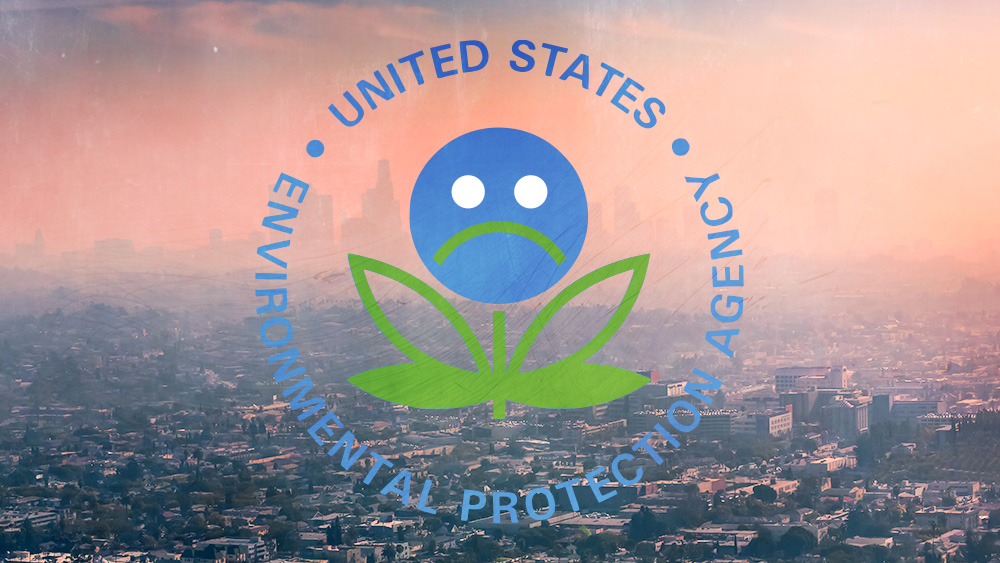
In a widely expected move, the Environmental Protection Agency has announced that it is revoking an analysis of greenhouse gases that laid the foundation for regulating their emissions by cars, power plants, and industrial sources. The analysis, called an endangerment finding, was initially ordered by the US Supreme Court in 2007 and completed during the Obama administration; it has, in theory, served as the basis of all government regulations of carbon dioxide emissions since.
In practice, lawsuits and policy changes between Democratic and Republican administrations have meant it has had little impact. In fact, the first Trump administration left the endangerment finding in place, deciding it was easier to respond to it with weak regulations than it was to challenge its scientific foundations, given the strength of the evidence for human-driven climate change.
The second Trump administration, however, was prepared to tackle the science head-on, gathering a group of contrarians to write a report questioning that evidence. It did not go well, either scientifically or legally.
Today's announcement ignores the scientific foundations of the endangerment finding and argues that it's legally flawed. "The Trump EPA’s final rule dismantles the tactics and legal fictions used by the Obama and Biden Administrations to backdoor their ideological agendas on the American people," the EPA claims. The claim is awkward, given that the "legal fictions" referenced include a Supreme Court decision ordering the EPA to conduct an endangerment analysis.
The EPA accepts that reality elsewhere, where we get to the real goal of this announcement: taking advantage of the anti-regulation majority on the court to get rid of that Supreme Court precedent. "Major Supreme Court decisions in the intervening years... clarified the scope of EPA’s authority under the Clean Air Act and made clear that the interpretive moves the Endangerment Finding used to launch an unprecedented course of regulation were unlawful," the EPA suggests. In other words, the past few years of court decisions make the administration optimistic that the current court will say that the 2007 ruling was wrongly decided.
To sell this decision to an American public that is increasingly experiencing the impacts of a warming planet, the EPA has settled on some creative accounting. It pretends that the Biden era car emissions rules, which it had already chosen not to enforce, would somehow raise the costs of new cars. That led to the claim of $1.3 trillion in savings by getting rid of the endangerment finding, which was left as a net gain solely because the EPA has decided to ignore the health costs of the ensuing pollution.
Despite the use of unserious language—the phrase "climate change zealots" appears more than once in its announcement—the EPA's tactical approach is largely solid. This decision will ultimately end up before the Supreme Court, and the majority that ordered an endangerment evaluation has since been replaced by an even larger majority with an extreme dislike for environmental regulations and their enforcement. That does not guarantee that they will overturn precedent, but it's probably the best shot the administration has to be free of any legal compulsion to address climate change.
The Department of Homeland Security (DHS) has reportedly been asking tech companies for information on accounts posting anti-ICE sentiments. According to The New York Times, DHS has sent hundreds of administrative subpoenas to Google, Reddit, Discord and Meta over the past few months. Homeland Security asked the companies for names, email addresses, telephone numbers and any other identifying detail for accounts that have criticized the US Immigration and Customs Enforcement agency or have reported the location of its agents. Google, Meta and Reddit have complied with some of the requests
Administrative subpoenas are different from warrants and are issued by the DHS. The Times says they were rarely used in the past and were mostly sent to companies for the investigation of serious crimes, such as child trafficking. Apparently, though, the government has ramped up its use in the past year. “It’s a whole other level of frequency and lack of accountability,” Steve Loney, a senior supervising attorney for ACLU, told the publication.
Companies can choose whether to comply with the authorities or not, and some of them give the subject of a subpoena up to 14 days to fight it in court. Google told The Times that its review process for government requests is “ designed to protect user privacy while meeting [its] legal obligations” and that it informs users when their accounts have been subpoenaed unless it has been legally ordered not to or in exceptional circumstances. “We review every legal demand and push back against those that are overbroad,” the company said.
Some of the accounts that were subpoenaed belong to users posting ICE activity in Montgomery County, Pennsylvania on Facebook and Instagram in English and Spanish. The DHS asked Meta for their names and details on September 11, and the users were notified about it on October 3. They were told that if Meta didn’t receive documentation that they were fighting the subpoena in court within 10 days, Meta will give Homeland Security the information it was asking for. The ACLU filed a motion for the users in court, arguing that the DHS is using administrative subpoenas as a tool to suppress speech of people it didn’t agree with.
In late January, Meta started blocking links to ICE List, a website that lists thousands of ICE and Border Patrol agents’ names. A few days ago, House Judiciary Committee member Jamie Raskin (D-MD) also asked Apple and Google to turn over all their communication with the US Department of Justice to investigate the removal of ICE-tracking apps from their respective app stores.
This article originally appeared on Engadget at https://www.engadget.com/big-tech/homeland-security-has-reportedly-sent-out-hundreds-of-subpoenas-to-identify-ice-critics-online-135245457.html?src=rss